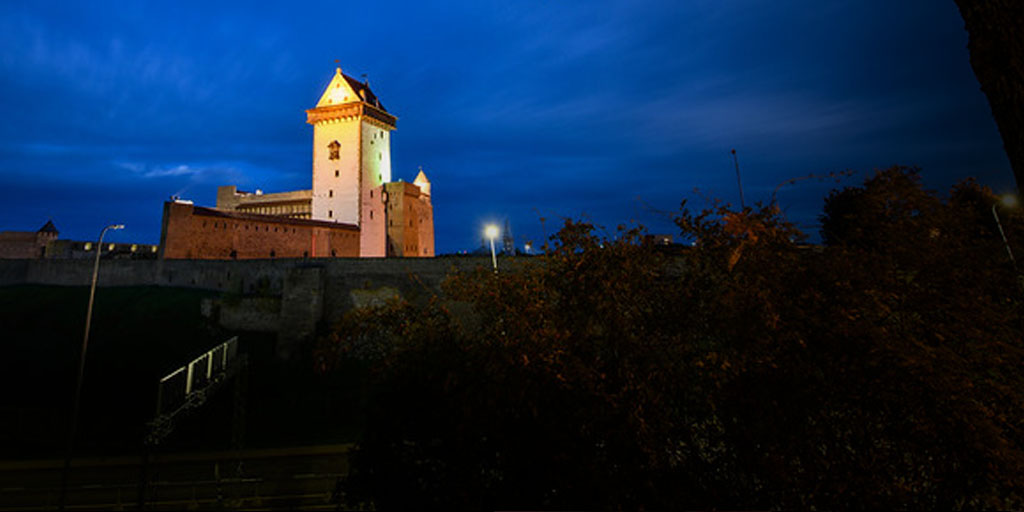
In this era of global tension with Russia, inevitably attention returns to Narva. “Is Narva next,” a popular question raised throughout the past two decades whenever Russia embarks on aggression against a neighbor, is once again in the headlines.
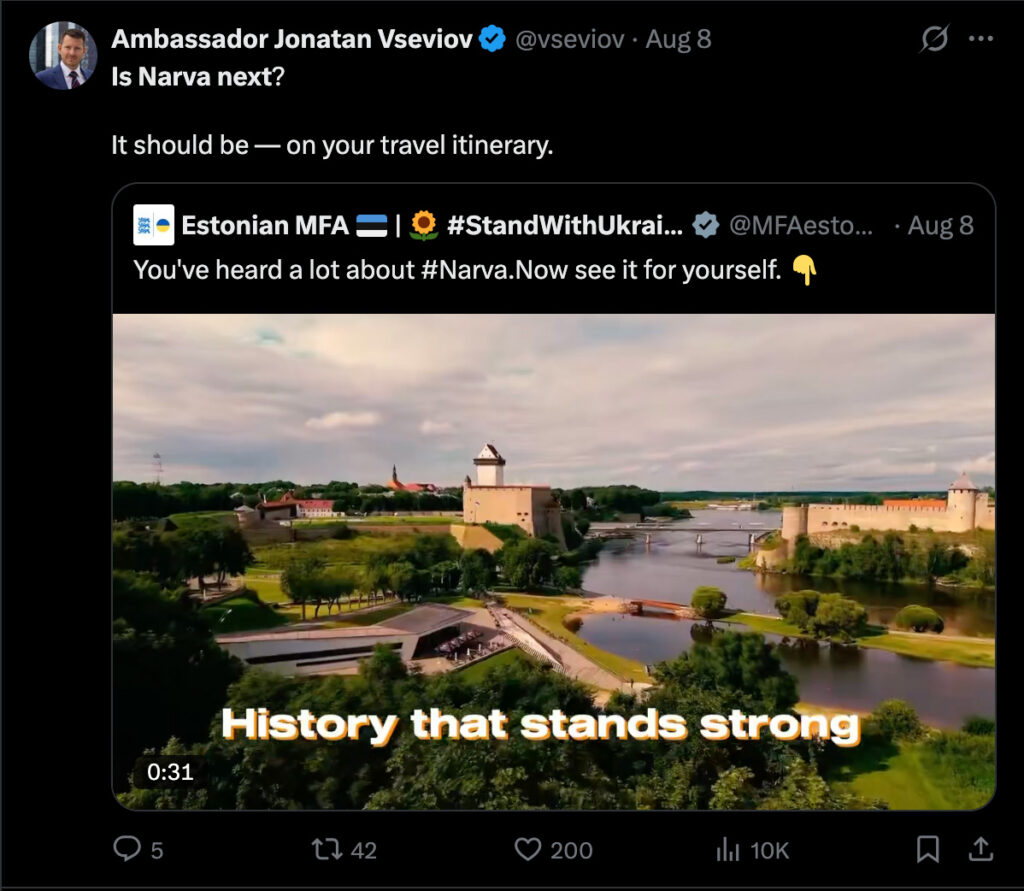
Of course this is not new. Narva is best known for the fortress that sits on the River Narva. Built under Danish rule in the mid-1200s and fortified by the Teutonic Order, it faces a dueling fortification across the river in today’s Ivangorod, built by Ivan III of Muscovy. Narva has sat at the edge of this imagined civilizational divide for centuries, with multiple, historic battles during some of the bloodiest conflicts of the past half millennium taking place in its vicinity.
And once again its “perilous” location has set the “think tank industrial complex” alight with doomsday scenarios hoping to justify their funding and existence. To counter this negative approach that some fear could result in unintended consequences, Estonia is suddenly pushing for people to actually see Narva for themselves.
What a novel approach, not just for the armchair analysts out there but also for anyone interested in a city that lived through so much history. But it’s not a new thing.
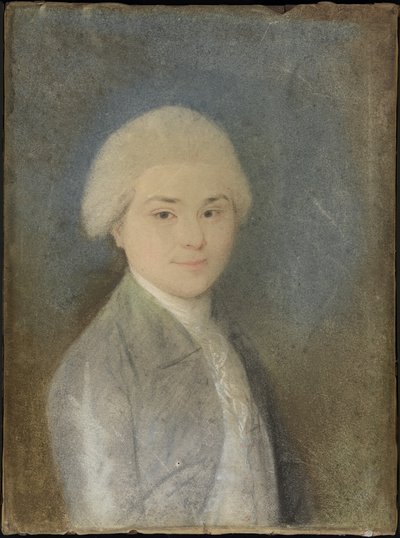
An American Teenager’s Visit
Back in the summer of 1781, an American teenager who had just turned 14 arrived in Narva, accompanying his boss who was travelling from Amsterdam to St. Petersburg. During the long trek on land, they passed Berlin, Danzig (today’s Gdańsk), Königsberg (today’s Kaliningrad), Memel (today’s Klaipėda), Mitau (today’s Jelgava), Riga, Neuermühlen (today’s Ādaži), and Narva prior to arriving in St. Petersburg. This eager-eyed teenager, half a world away from the Revolutionary War that would come to an end a few months later with the defeat of Lord Cornwallis at Yorktown, wrote a letter to his father, which included:
“Narva is the last place which we stopp’d at before our arrival here, it is a small, insignificant town but will be always famous for the battle fought here.”[i]
Spending two days in Narva, in his own diary on Friday, August 24, 1781, he wrote:
“The city of Narva is very small <middlin> pretty well fortified, there are not more than 200 hundred houses in the city, but the Suburbs Which are on the other side of the river are larger than the city itself. There are about 3000 Souls in the whole. It is the capital of Estonia, another province conquer’d by Peter the great from Sweden, and is famous for the battle fought there, in which Charles the twelfth gain’d so much glory. It was taken by Peter in 1704: They say that this is a better port than that of Petersburg…”[ii]
He and his boss eventually arrived in St. Petersburg, but John Francis Dana was never credentialled by Catherine the Great. Yet he and his teenage secretary, John Quincy Adams, remained in St. Petersburg for two years.
Yes, the 14-year-old teenager who visited Narva for two days in 1781 during his own country’s fight for independence was future President John Quincy Adams. And yes, that letter he wrote to his father was to then-future President John Adams.
John Quincy Adams would see Narva again in 1814 as he departed his St Petersburg posting. In the 33 intermittent years, he had become a skilled lawyer, arguing cases at the US Supreme Court, a Senator for Massachusetts, and, using the diplomatic skills he honed during his youth, a key diplomat to several European countries before his appointment to Russia in 1809. This time, Alexander I did recognize the American, and he would remain until 1814.
He had a final glimpse of Narva as he left his diplomatic post in St. Petersburg, writing his wife (and future First Lady) Louisa Adams on May 1, 1814:
“I travelled the whole of the first Night and reached Narva in twenty-one hours from St: Petersburg—Last Night we had a Snow Storm and rested about six hours…As we were passing the River of Narva, we were saluted with the Cannonade of a Te Deum for Paris.”[iii]
The future Secretary of State and President would spend some time in Tallinn, well-documented in his diary, before departing across the Baltic Sea to Sweden and eventually towards his role in Ghent to conclude peace with Britain as the War of 1812 raged on back home.
The Americans Who Made the Ultimate Sacrifice in Narva
War seems to be a theme in this article, as the two Narva stops made by John Quincy Adams saw the United States embroiled in war with Great Britain. More than a century later, the two countries now allies in the Great War, volunteers from across America spread throughout Europe on behalf of the American Red Cross to assist the long-suffering peoples across the continent. Typhus epidemics raged in multiple conflict zones from the Baltics to the Balkans. Teams of Americans fought the plague that was exacerbated by troop movements in the closing days of World War I and the multitude of conflicts that erupted – including the Estonian War of Independence and the related Russian Civil War.
In one perilous March 1920 mission to Narva, where typhus ravaged the retreating White Russian forces and refugees from Soviet Russia, two American volunteers lost their lives from typhus. Lieutenant Clifford A. Blanton, a young man of 27 from Chattanooga, Tennessee, died on the 26th, while Lieutenant George W. Winfield, a justice of the peace in Highland Falls, New York, died on the 28th, leaving behind a widow and three children. Both American volunteers were at first interred at the Military Cemetery (Sõjaväekalmistu) in Tallinn with military honors prior to repatriation to the United States.
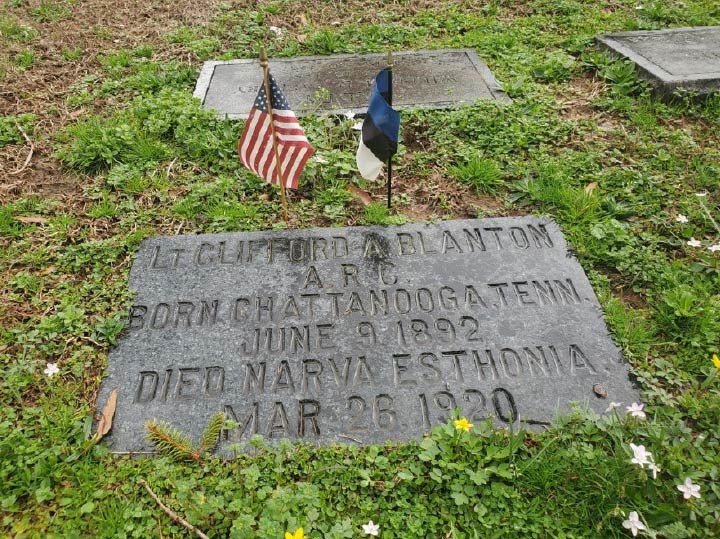
The rest of that team, including Dr. J. Atwood Whitaker and Captain Wilbur F. Howell barely survived, as did Captain Allen C. Robinson – the son of a former Foreign Minister of the Kingdom of Hawaiʻi, who would lose his life just a few years later in Honolulu. The latter is part of a remarkable connection between Estonia and the Kingdom of Hawaiʻi that began over 200 years ago.
Dr. Lewis R. Tryon, who helped to save Captain Howell, later wrote a book Poor Man’s Doctor that recalled his volunteer work in Estonia:
“[Blanton and Winfield] had gone through the World War and escaped with their lives, only to lose them now before a dreadful disease to face which was a thousand times worse than meeting a machine gun. I mean that. Nobody who has not been through it can understand the dread and fear that constantly accompanies a war against typhus.”[iv]
Several dozen of these volunteers would be awarded Estonian national honors.[v] Few today remember the sacrifice of these individuals, although there is an effort being undertaken to build a monument to their heroism.
Make Narva Next
The Narva of today is vastly different from what the teenage John Quincy Adams saw, or where the American Red Cross volunteers served. It is a vibrant city, where one can still feel history come alive every step you take. It has its challenges, like all cities, but you can sense the freedom enjoyed there – especially looking across the river.
Go see it for yourself – make Narva the next…destination for your travels.
[i] https://founders.archives.gov/documents/Adams/04-04-02-0139
[ii] https://founders.archives.gov/documents/Adams/03-01-02-0003-0003-0003
[iii] https://founders.archives.gov/documents/Adams/99-03-02-2483
[iv] https://www.amazon.com/Poor-Doctor-Lewis-Royer-Tryon/dp/125831360X
[v] https://ee.usembassy.gov/wp-content/uploads/sites/248/2025/07/Estonian-State-Awards.pdf
